ADA Certified Portable Restrooms: A Practical Introduction of Federal Criteria
Anyone who has actually planned an outside event, managed a temporary site, or coordinated public gain access to on a hectic residential or commercial property has run into the same practical concern: what counts as an ADA compliant portable washroom, and what does the law in fact require?
That question seems simple up until you are the one picking devices, placing them on irregular ground, or attempting to make a last-minute improvement before visitors arrive. In method, ease of access is not practically ordering a larger delay and calling it excellent. Federal standards take a look at the washroom system itself, how individuals reach it, exactly how they enter it, and whether it is functional in a genuine, daily sense by individuals with disabilities.
For mobile restroom services in the United States, the governing government framework originates from the 2010 ADA Specifications for Accessible Design, as analyzed by the Department of Justice and the United State Accessibility Board. Those requirements matter since mobile devices are typically utilized in setups where irreversible restrooms are inaccessible or as well far away. A festival, a short-term public event, a pop-up workspace, or a temporary procedures website still needs to account for access. The momentary nature of the toilet does not make availability optional.
Where the government policy starts
The first thing to recognize is that portable washrooms are not outside the ADA even if they are temporary. That is one of the most common misconceptions I see in real-world preparation discussions. People frequently assume that if an occasion lasts just a day or 2, or if the units are rented instead of developed right into a structure, the typical ease of access expectations in some way soften. They do not.
Federal ease of access requirements relate to portable toilet rentals, and the scoping regulation for clusters of single-user portable commode units is specifically vital. When portable commodes are supplied in a team, a minimum of 5 percent of the units in each collection need to be accessible. The Gain access to Board has explained that this uses even at short-term events.
That 5 percent number seems uncomplicated, but it influences intending earlier than many people recognize. If you wait until the delivery truck is arranged to consider accessibility, you may discover that the obtainable system was not booked, the website can not suit it appropriately, or the quantity got leaves no room to fulfill the minimal proportion. Availability often tends to go a lot more smoothly when it is dealt with at the very same time as the first bathroom count, not as a different add-on.
This is additionally where language can obtain sloppy on the market. You may listen to individuals request for an ada mobile washroom, an ada portable toilet, or an ada handicap easily accessible mobile bathroom. Those phrases are common in everyday speech, however the vital problem is not the tag in a rental directory. The concern is whether the unit and its placement please the government ease of access needs that apply.
What "easily accessible" implies in practice
An easily accessible mobile bathroom is not specified by dimension alone. A larger impact aids, but federal criteria go further. The system needs to satisfy relevant toilet-room technical demands, including issues such as clearances, turning space, door navigating clearance, and relevant policies for grab bars and water storage room clearances.
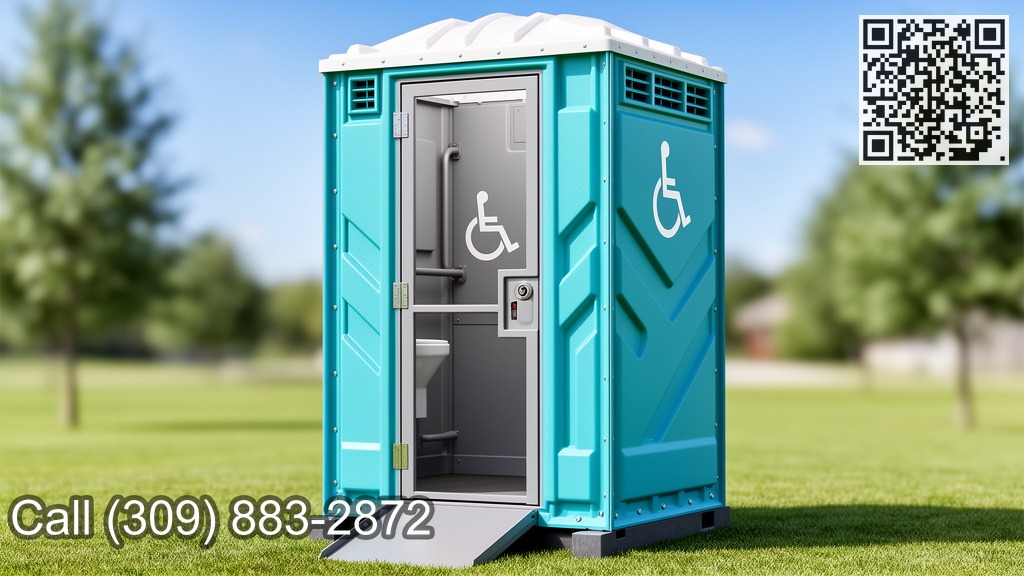
Those details matter since they affect whether someone can really get in, position themselves, and utilize the bathroom with self-respect and self-reliance. A roomy interior that lacks correct handling clearance can still fail. A system with a hefty or uncomfortable door method can still fall short. A stall that practically contains a bathroom but does not give the called for functional room around it can still fail.
That is why the phrase ada certified portable toilet demands ought to never be decreased to a marketing claim. Conformity is a combination of layout functions and website problems. Both issue. An effectively produced easily accessible device can end up being inaccessible if it is embeded in mud, obstructed by visuals, or reached just by a high improvisated ramp.
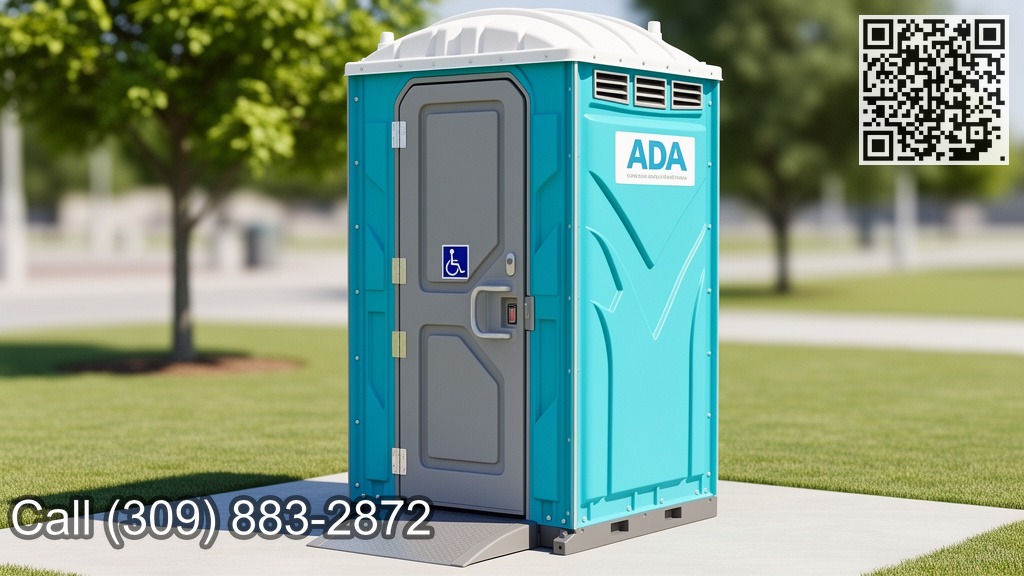
The requirements additionally require easily accessible mobile bathroom units to be related to the International Sign of Access. This is not just a visual courtesy. It aids individuals locate the available alternative quickly, especially in huge clusters where people may be scanning from a range or navigating via crowds.
The course matters as high as the unit
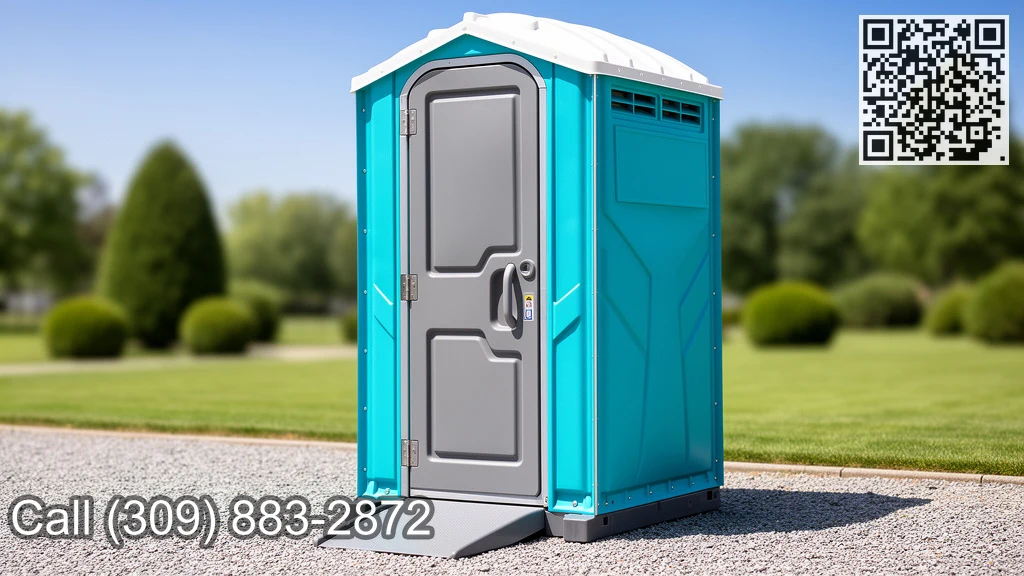
One of one of the most ignored parts of conformity is the path bring about the washroom. Federal support does not stop at the toilet door. Easily accessible mobile devices must have an accessible path and entryway, and any type of ramps or landings that are needed need to abide by ADA technical requirements.
This is where even well-intentioned site setups can run into trouble. A provider may supply a compliant device, yet the final positioning is often controlled by the event organizer, general specialist, home supervisor, or website superintendent. If the only path needs going across deep crushed rock, soft lawn after rain, or a sudden level adjustment with no certified ramp or touchdown, the system may not be meaningfully available despite the fact that the tools itself is correct.
I have actually seen this concern in short-lived arrangements where the obtainable washroom was put at the much edge of an area because that is where the vehicle had room to unload. Theoretically, an ada compliant available portable restroom had been gotten. In technique, a wheelchair user would have needed aid simply reaching it. That type of inequality is exactly why placement ought to never ever be dealt with as a small logistics note.
An excellent website testimonial asks practical inquiries before shipment. Can somebody approach the entryway without encountering a barrier? Is the ground steady enough for foreseeable motion? If a ramp or landing is needed, has any individual validated that it meets the suitable technical standards rather than operating as a harsh convenience fix? Those questions save embarrassment later on, and a lot more importantly, they secure genuine access.
The 5 percent rule, and why "cluster" matters
The government basic speaks with clusters of mobile single-user toilet devices. At the very least 5 percent in each cluster should be accessible. That phrase, each collection, is worth reducing for because it has genuine operational consequences.
If restrooms are divided across a website, availability needs to not be taken something that can just be focused in one distant corner. The policy is tied to each collection, not to the total matter across an entire residential property in the abstract. For event and website planning, that suggests circulation issues. If individuals are expected to use several distinct groups of systems, accessibility has to comply with that same logic.
This point frequently gets shed when somebody says, "We have one obtainable system somewhere on site." Sometimes that statement holds true but insufficient. The appropriate federal guideline is not satisfied by vague schedule if the cluster-based demand is https://pristineportablesil.com/galva-il/ not met.
For planners, the much safer behavior is to map bathroom places first, identify where the actual collections are, and after that compute the easily accessible systems for each and every group. It is much easier to do this prior to agreements are completed than to scramble after trucks are rolling.
A brief planning check before you order
A small amount of advancement preparation avoids most portable washroom accessibility blunders. The federal standards are technical, but the very early decision points are not mysterious.
- Count how many single-user mobile systems will certainly be in each collection, not simply the complete throughout the entire site.
- Confirm that at the very least 5 percent of the systems in each collection will certainly be accessible.
- Plan an available course to the unit, consisting of any type of required ramp or touchdown conditions.
- Verify that the obtainable device will certainly be identified with the International Sign of Accessibility.
- Review placement problems on site, due to the fact that a compliant device can still come to be unusable via inadequate location choices.
That checklist is easy intentionally. It does not change a legal or design evaluation, but it records the preparation choices that usually determine whether the last arrangement works.
The construction-site question
Construction settings typically produce complication because there is a details distinction in the criteria that people half-remember and after that use also generally. The older 1991 ADA design criteria consisted of an exemption pertaining to mobile toilet units at construction websites when those devices were made use of exclusively by construction employees. That exception has actually led some people to think that all temporary bathroom arrangements at work sites are exempt from access requirements. That is as well wide and can be a pricey misunderstanding.
The key point is the narrowness of the distinction. The exemption referenced in the verified context relates to construction-site mobile bathroom devices used exclusively by construction personnel under the pointed out 1991 criterion. It does not eliminate the broader ease of access needs that put on general portable bathroom services. When a mobile bathroom configuration serves the general public, site visitors, or other individuals outside that restricted exclusive-construction-personnel scenario, the accessibility evaluation changes.
That difference issues on mixed-use sites. A redevelopment task might have portable units behind fencing for staff use just, while also keeping public-facing short-lived centers for consumers, homeowners, or site visitors nearby. Treating those as the exact same classification is high-risk. The details of usage matter.
This is one factor seasoned website supervisors separate internal assumptions from public-facing obligations. If there is any type of chance a device is intended for public accessibility, public programming, or site visitor usage, it is smart to assess it under the relevant government access needs rather than depending on hearsay about a building and construction exception.
Why labels from suppliers are not enough
The rental market makes use of a lot of shorthand. You will certainly see phrases such as ada compliant mobile washrooms, ada-compliant mobile bathrooms, ada compliant portable commode, and ada-compliant portable toilet in brochures, on the internet stock web pages, and quote sheets. Those labels can be helpful for starting the conversation, but they must not end it.
A supplier might appropriately identify an unit designed for access, however conformity is not simply an item group. It is a product plus release question. If the course is inaccessible, if the cluster matter is managed improperly, or if the device lacks the called for recognition, the arrangement can still drop short.
This is where skilled organizers have a tendency to ask more pointed concerns. Not "Do you have an ADA device?" yet "Just how will the easily accessible device be identified?" "What website conditions does it require?" "Can our chosen area support an obtainable entryway?" "Just how should we consider numerous clusters?" Those concerns generate much better outcomes than relying upon a magazine label.
For individuals browsing online, terms like ada portable commode rental or ada certified portable toilets are useful search language, however they should bring about an in-depth conversation, not a box-checking exercise.
Temporary occasions are not a loophole
The Gain access to Board's interpretation that the 5 percent accessible-unit rule applies even at momentary events is among one of the most crucial factors in this whole subject. It removes a very common assumption that pop-up or short-duration events run under looser expectations.
From a practical viewpoint, short-lived events can be harder to solve than long-term facilities. Ground conditions alter by the hour. Foot traffic is uncertain. Configuration crews are scooting. Paths that appear convenient in the morning can come to be challenging by midafternoon if grass transforms soft or crowd-control devices blocks an approach.
That is why short-lived occasion availability needs a person to possess the information. If nobody is plainly responsible, the available course is frequently the first point to break down. An unit may be delivered correctly, marked appropriately, and counted appropriately, yet after that ringed with short-term barriers, parked beside a service path, or stranded on surface that no longer features well.
I have seen occasion groups deal with ease of access as a purchasing line thing when it actually needs to be an operations issue as well. An easily accessible portable toilet has to stay accessible after delivery, via real event problems, not just during the site map phase.
Common failing factors that do not look obvious at first
Most ease of access errors with portable toilets are not dramatic. They are normal oversights that stack up.
One constant issue is treating the available device as compatible with conventional systems when format modifications happen late. The larger unit usually needs even more careful positioning, and relocate delicately can compromise the course or entryway. One more problem is separating the accessible device too much from the rest of the cluster in the name of convenience for distribution or maintenance. That can produce a segregated customer experience and may not line up with just how the cluster guideline runs in practice.
A 3rd trouble is presuming firm ground without inspecting just how the website behaves under climate and traffic. A route that works on dry configuration day might become hard after rain or after hundreds of individuals go across the location. Mobile toilet planning often tends to go much better when groups ask not just "Will this work at 8 a.m.?" however additionally "Will this still work midway through the event?"
There is additionally the issue of signs and exposure. The International Icon of Availability is required, and it helps greater than some organizers value. At crowded sites, people make decisions swiftly. Clear recognition lowers complication, especially when attendants, volunteers, or personnel are not nearby to direct people.
Compliance stays in a larger enforcement environment
Accessibility planning for mobile washrooms does not happen alone. A more comprehensive compliance environment has actually been developing across sectors, which matters even when the specific subject is a short-lived bathroom rental.
A current example is the Division of Justice assistance from April 2026 extending the due date for sure state and city government internet and mobile access policies to April 26, 2027 for larger entities. That support has to do with digital ease of access, not portable toilets. Still, it signifies something vital: ADA conformity remains an energetic enforcement and plan location. Organizations must not think accessibility responsibilities are fading into the history. If anything, the opposite is true.
For public agencies, occasion operators, and organizations that offer the public, this more comprehensive climate must encourage a much more self-displined technique. Ease of access is best taken care of as a routine planning requirement, not as an afterthought triggered just by complaint.
How to speak to your rental supplier and your website team
An efficient discussion concerning an ada accessible portable washroom generally includes 2 teams simultaneously: the rental carrier and the people controlling the site. If those discussions take place independently, voids appear. The supplier might presume the path is someone else's responsibility. The site group may assume the system itself assures conformity. Neither assumption is safe.
The greatest technique is to tie the federal requirements straight to the site plan. Discuss the number of devices in each cluster, the demand for accessible identification, and the route to the entrance prior to delivery day. If ramps or landings may be required, elevate that problem early, since those functions are not something to improvise casually on the spot.
Here are the questions that often tend to emerge the best problems quickly:
- How many portable single-user systems will certainly remain in each cluster?
- Which devices are intended to serve as the easily accessible devices for those clusters?
- What is the available route per of those systems from the anticipated point of arrival?
- Will any ramp or landing be needed, and if so, who is accountable for guaranteeing it complies?
- How will the obtainable devices be noted with the International Icon of Accessibility?
That sort of conversation is not overkill. It is the practical happy medium between legal abstraction and final scrambling.
The human side of obtaining it right
Standards language can seem technological, but the reason behind it is easy. People need restroom access that is useful, predictable, and considerate. When that gain access to is missing out on, the problem falls on the individual who required the facility, out the organizer who failed to believe ahead.
That problem appears in manner ins which are simple to ignore. A guest may need to request for support they did not desire. An employee may need to travel much further than coworkers for fundamental gain access to. A site visitor may leave an event early because the course to the only easily accessible system is also challenging. These are not abstract damages. They transform whether a person can take part fully in work, public life, recreation, and neighborhood events.
When groups treat ada compliant available mobile bathrooms as part of normal operations as opposed to a specific niche lodging, the result is usually far better for everyone. Routes are clearer. Layouts are extra thoughtful. Team are less likely to improvisate under stress. Most significantly, users encounter a site that anticipated their presence rather than responding to it.
What "sensible" really implies here
A functional overview of government requirements need to leave area for judgment without drifting into uncertainty. The tough supports are clear. The controlling government requirements come from the 2010 ADA Standards for Accessible Design as analyzed by the DOJ and Accessibility Board. At the very least 5 percent of single-user portable bathroom devices in each collection must be accessible, including at momentary occasions. Available systems should lug the International Symbol of Accessibility. They need to have an available route and entry, and any type of required ramps or landings need to adhere to ADA technical requirements. The systems themselves have to satisfy relevant toilet-room technical regulations worrying clearances, turning space, door maneuvering clearances, and relevant grab-bar and water closet clearance requirements.
From there, the useful work is disciplined implementation. Order the ideal devices. Matter by collection. Place them where people can actually reach them. Shield the route after configuration. Do not rely on advertising and marketing language where an actual site evaluation is required. And take care with the construction-site exemption, due to the fact that it is narrower than many people assume.
That is the heart of ADA preparation for mobile washrooms. The requirements are government, yet the result is regional and immediate, shaped by where the unit sits, how the ground acts, and whether somebody can use it without obstacles. When those details are handled well, accessibility stops feeling like a technical worry and starts working as what it needs to be, ordinary proficient planning.
 Ask ChatGPT
 Ask Grok
 Ask Perplexity
 Ask Claude
 Ask Google AI
 Ask You